The question we get most from students, recent graduates, and working professionals in Nepal is some version of this: "Is drone piloting actually a career, or just a hobby that people pretend is a career?"
After running workshops, training sessions, and fielding this question at every industry event we attend — the answer is clear. It is a career. A fast-growing one. And Nepal, specifically, is one of the most interesting places in the world to build it.
Here is what you actually need to know.
WHY DRONE PILOTS ARE IN DEMAND RIGHT NOW
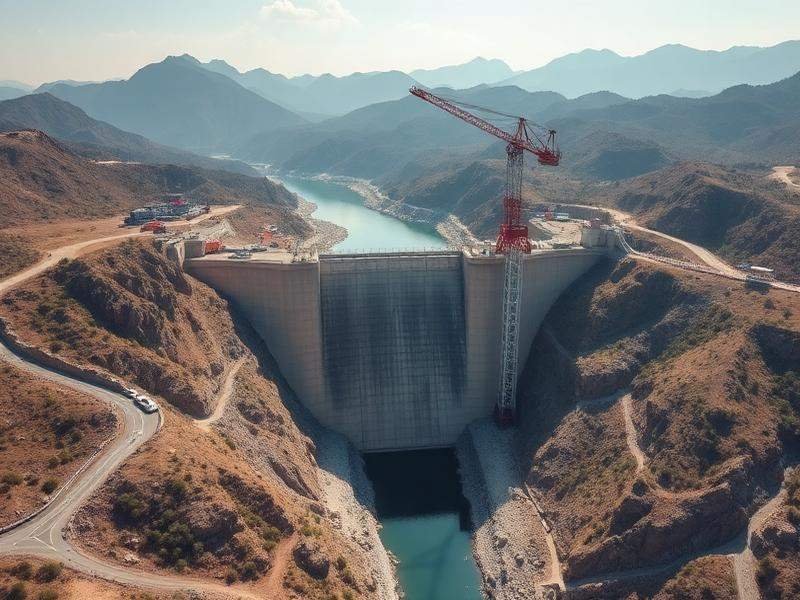
Nepal's terrain makes conventional ground-based work slow, expensive, and in some cases impossible. River corridor surveys that would take a ground team six weeks can be flown in four days. Bridge construction sites need weekly orthomosaics for compliance. Disaster response teams need aerial assessment within hours of an event, not days.
The organisations paying for this work — INGOs, government agencies, construction firms, film and media productions, infrastructure contractors — are not hobbyists. They are professional clients with budgets, deadlines, and compliance requirements. They need operators who can deliver professional-grade results, hold valid licences, and understand what they are actually being hired to do.
CAAN has made remote pilot licensing a formal requirement for commercial drone operations in Nepal. That means the barrier to entry is rising — and so is the value of being properly trained and certified.
The operators who invested in training early are now the ones winning contracts.
WHAT CAAN ACTUALLY REQUIRES FOR COMMERCIAL OPERATIONS
Before you can legally charge anyone for drone work in Nepal, you need to meet CAAN's requirements for remote pilot licensing. This is not optional, and clients increasingly ask to see it.
The key requirements are:
→ Completion of an approved remote pilot training course in the category of drone you intend to operate
→ Demonstrated competency in safe UAV operation under standard conditions
→ Basic knowledge of radio frequency communication and airspace rules
→ Understanding of drone equipment, control systems, and emergency procedures
→ Age 18 or above, Class 12 or equivalent education
The drone must also be registered with CAAN and carry a Unique Identification Number (UIN). For commercial operations above 400 feet or with drones over 2kg, additional ministry approvals are required.
Training is not just a box to tick. In Nepal's complex airspace — mountain terrain, rescue helicopter corridors, sensitive no-fly zones — a pilot who does not understand the rules is a liability, not an asset.
WHAT GARUDX TRAINING COVERS
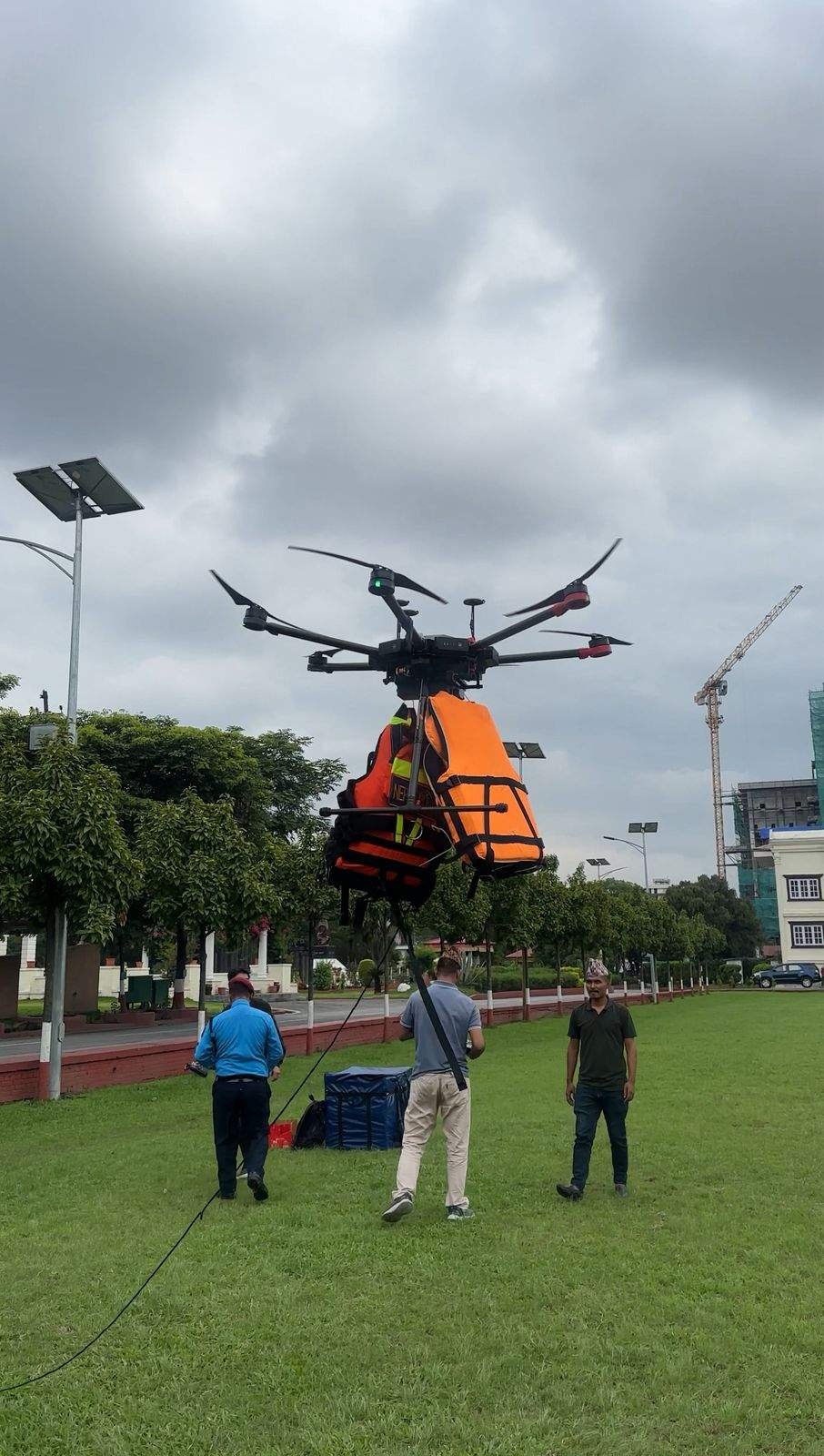
GarudX has been operating drones commercially in Nepal for eight years. We have flown survey corridors, SAR deployments with Nepal Police, film productions, and custom UAV operations across terrain that most operators will never see. Our training is built from that field experience — not from a textbook written for flat terrain in another country.
Foundations: Flight Theory and Airspace Understanding how UAVs generate lift, how thin air affects performance at altitude, Nepal's airspace structure, CAAN regulations, no-fly zones, and permit requirements. The theory that keeps you legal and your aircraft airborne.
Pre-Flight and Safety Protocol Equipment checks, battery management, emergency procedures, weather assessment for mountain conditions, site surveys before flying. The habits that prevent incidents.
Hands-On Flight Training Actual stick time. Takeoff and landing, orientation, emergency manoeuvres, GPS failure handling, operating in wind. You fly — a lot. We do not run training where participants watch instructors fly and call it experience.
Camera and Payload Operations Gimbal calibration, exposure settings, mission planning for photogrammetry, overlap calculations, data management. The difference between footage and deliverable data.
Commercial Operations: Clients, Contracts, Permits How to scope a drone project, price it, prepare documentation for CAAN permits, communicate with clients, and deliver professional outputs. The business side that most training programmes skip entirely.
Advanced Track: Survey and Mapping For participants who want to work in the survey and inspection sector — RTK positioning, ground control points, orthomosaic processing, volumetric analysis, delivering data that meets engineering and legal standards.
WHO THE TRAINING IS FOR
We run training for three distinct groups, and the programme is structured differently for each.
Beginners with no prior flight experience Students, graduates, and career-changers who want to enter the drone industry from zero. We start with simulators, move to small platforms, and build confidence before putting you on a commercial-grade UAV.
Hobbyists who want to go professional People who can already fly but do not have the regulatory knowledge, permitting experience, or commercial skill set to take client work. We close those gaps specifically.
Organisations and institutions Teams that want in-house drone capability — survey companies, NGOs, media organisations, educational institutions. We design custom training programmes for your specific use case and equipment.
THE REALITY OF BUILDING A DRONE CAREER IN NEPAL
We will be direct about this, because most training providers are not.
A drone licence alone does not get you clients. The operators earning consistent income in Nepal are the ones who can deliver a specific, verifiable output — a georeferenced orthomosaic, a certified survey dataset, footage that meets a broadcast standard, a SAR deployment that worked under pressure.
The drone is a tool. What you can do with it is the career.
GarudX training is designed to produce operators who can actually work — not just fly. That means pairing flight hours with real-world project simulation, permit preparation, and output review. Participants leave with a portfolio of work, not just a certificate.
What the market is paying for right now in Nepal:
Survey and mapping operators with RTK experience are being hired by infrastructure and development projects across the country. Film and commercial production teams need FPV and cinelifter pilots who can work to a brief and deliver broadcast-quality footage. INGOs and development organisations are actively looking for locally-trained operators for disaster response and monitoring work. Construction firms need operators who can run weekly site surveys and process volumetric data.
These are not hypothetical opportunities. They are active requirements we see in our own client pipeline.
NEXT INTAKE
GarudX training workshops run in scheduled cohorts with limited seats. We keep groups small deliberately — you get actual flight time, not a seat in a lecture room watching a slide deck.
If you are interested in joining an upcoming session, or want to discuss a custom programme for your organisation, reach out directly.
Contact: collaborate@garudx.com Training enquiries: garudx.com/services/training-workshops